
Artist Michelle Baharier does not often speak publicly about her own disabilities. But in the context of her current exhibition, Filling the Gaps, shown at SHARP Gallery, she felt it was important to do so.
SHARP Gallery is not a conventional exhibition space. It is located within a locked psychiatric hospital, a setting where access to culture is often limited or entirely absent. The gallery exists to enable people who are receiving inpatient mental health care to encounter art within their everyday environment. For Baharier, this context is not incidental. It is central to the work.
 Artist Michelle Baharier with Accessible Transport Activist Sue Elsegood
The project Filling in the Gaps, commissioned by London Transport Museum and supported by Arts Council England, has been in the making for the last five years. It features ten new portraits created through close collaboration with transport accessibility activists whose voices have shaped the movement for accessible public transport in the UK.
Following a sequence of public exhibitions across the UK, the full series will enter the London Transport Museum Collection at the end of 2026.
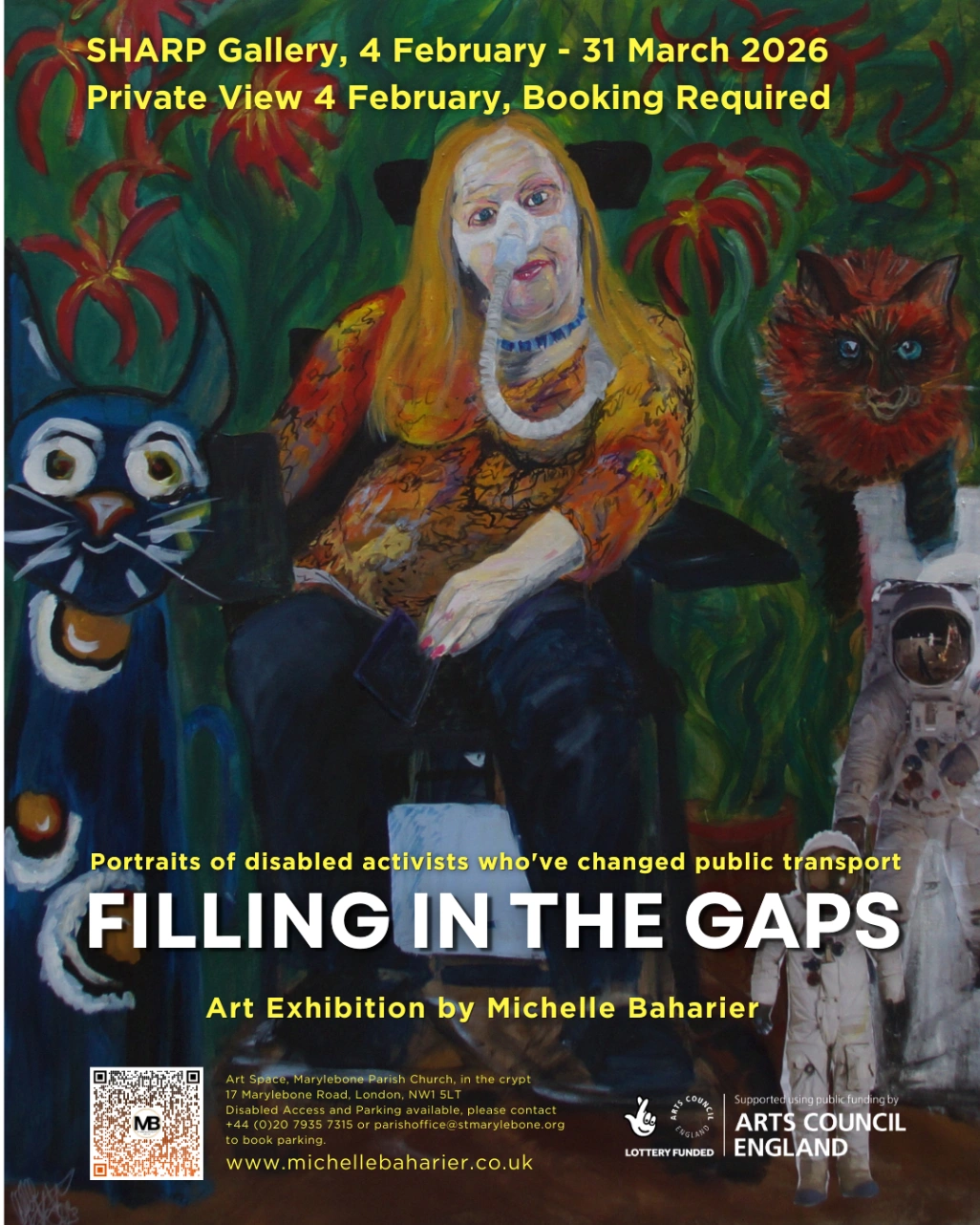
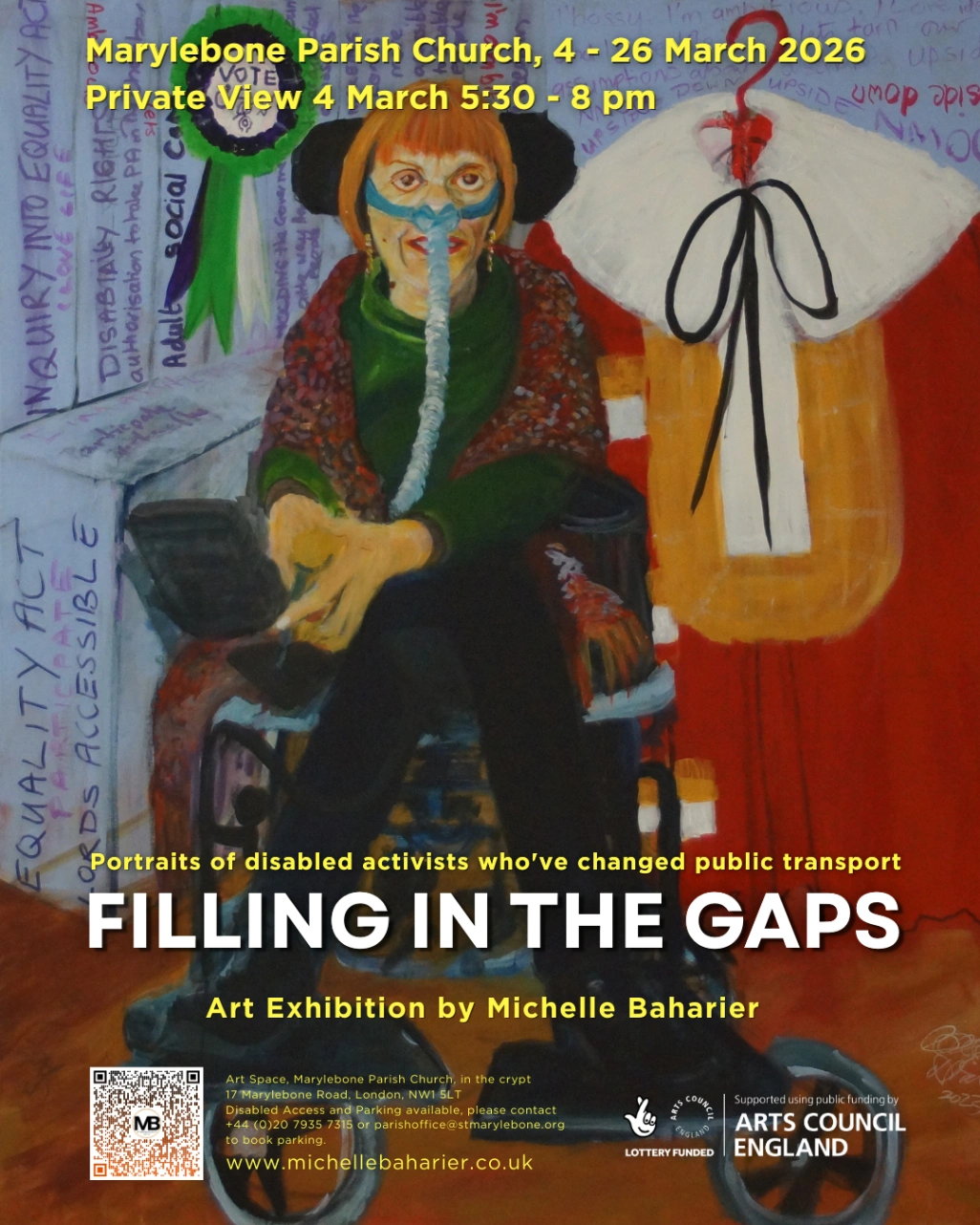
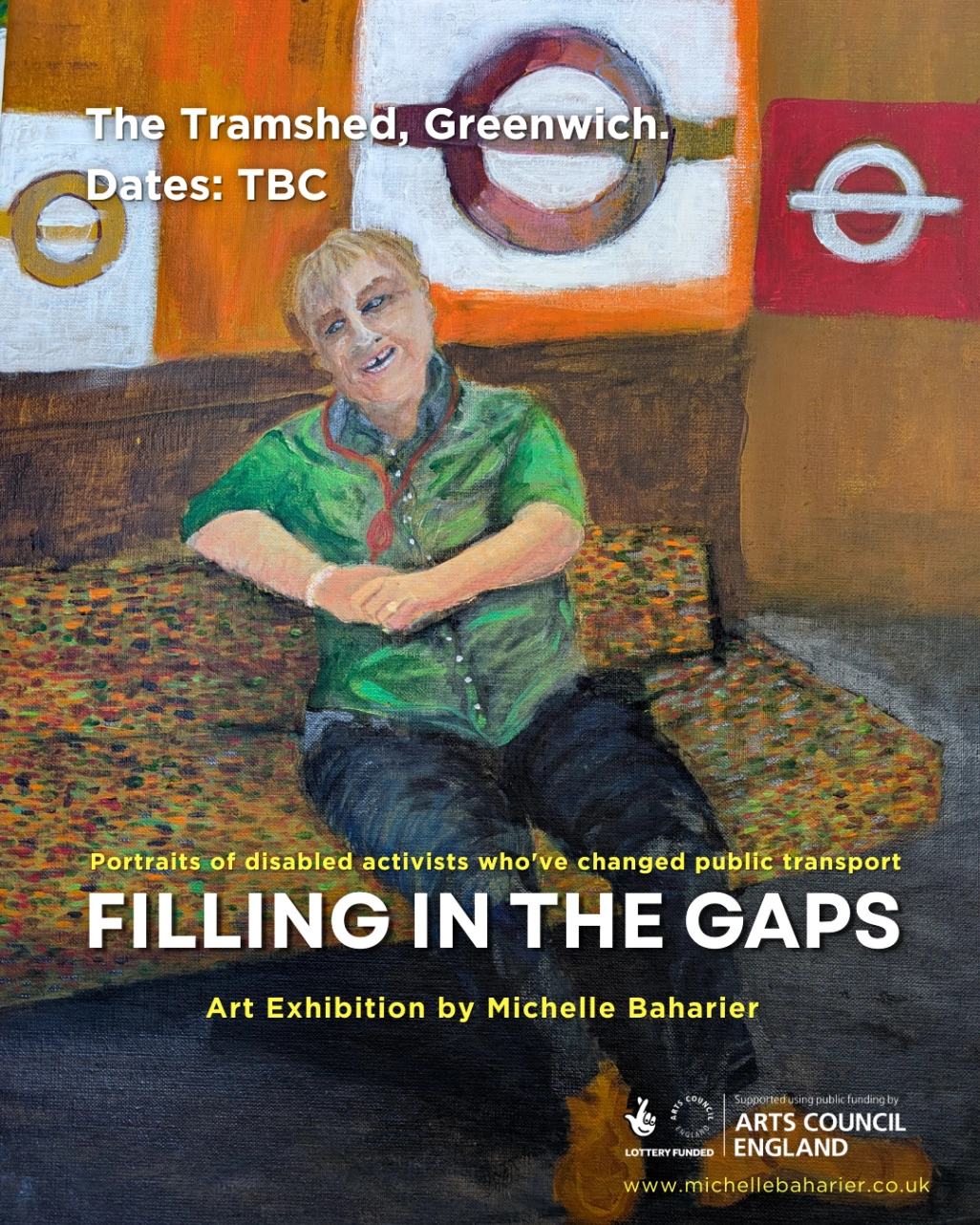
“When you’re on a hospital ward, it’s really boring,” Michelle explains. “There’s not a lot to do. And it’s important to remember that.”
Boredom may seem like a small thing, but in institutional settings it becomes part of a much larger picture. Many patients in psychiatric hospitals live under strict curfews. Some are not allowed to leave the ward at all. Their civil liberties are curtailed, sometimes entirely removed. In this reality, access to art is not a luxury. It becomes a form of connection, stimulation and recognition.
Baharier’s decision to place Filling the Gaps within SHARP Gallery is deeply tied to the themes of the work itself. The project explores disability activism, a field that often foregrounds physical access while leaving mental health at the margins. Baharier is direct in challenging that separation.
“Disability activism includes mental health,” she says. “Mental health is a disability, like it or not.”
By situating the work inside a psychiatric hospital, the exhibition removes the distance between subject, space and audience. The people encountering the artworks are not passive viewers. They are individuals whose lived experience sits at the very heart of the conversation the work is asking us to have.
Filling the Gaps becomes both a literal and symbolic act. It fills the gaps in access to culture for people whose freedom is restricted. It also addresses the gaps in how disability is understood, discussed and represented within the arts. The exhibition insists that mental health must be part of any serious conversation about inclusion.
SHARP Gallery’s mission and Michelle Baharier’s practice meet at a crucial point: the belief that art belongs everywhere, and to everyone. Especially in spaces where choice, autonomy and stimulation are limited, the presence of art can affirm humanity, agency and dignity.
In speaking openly, even briefly, about her own experience, Baharier adds another layer of honesty to the work. It is not a “tirade,” as she jokingly describes it, but a necessary articulation of why this exhibition matters.
Filling the Gaps reminds us that inclusion is not theoretical. It is practical, spatial and political. Sometimes, it begins by placing art exactly where society has forgotten to look.
Share this post